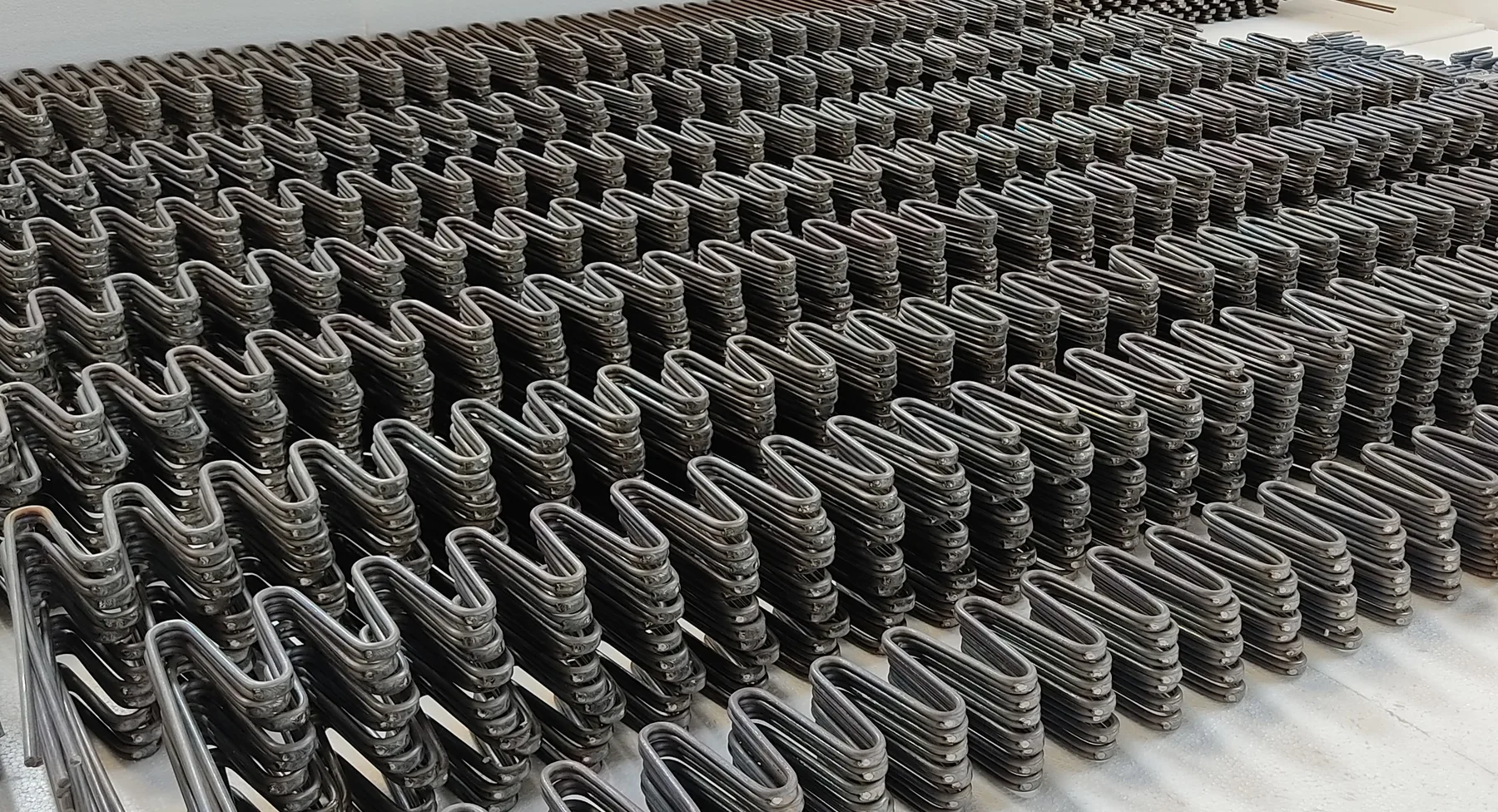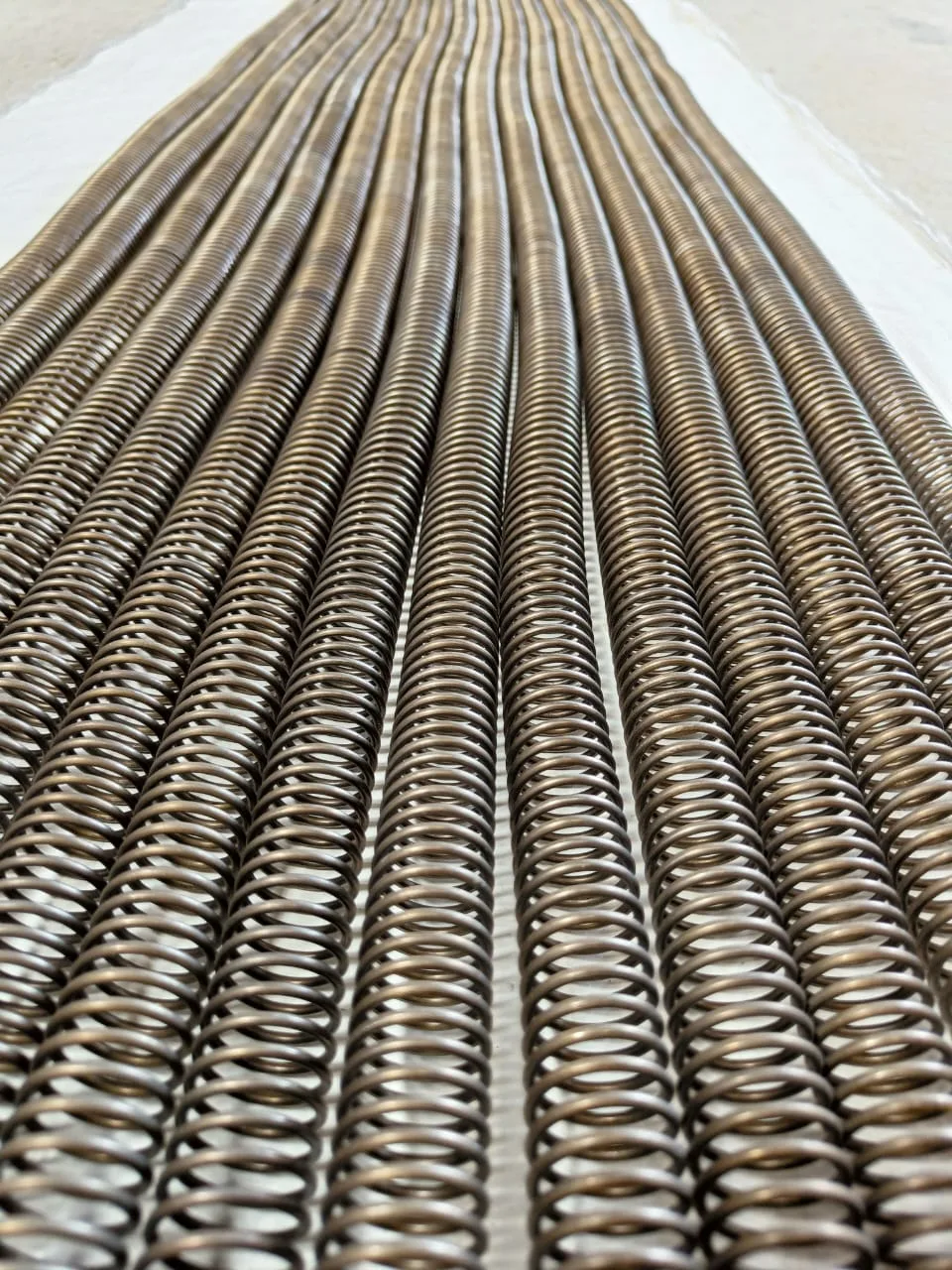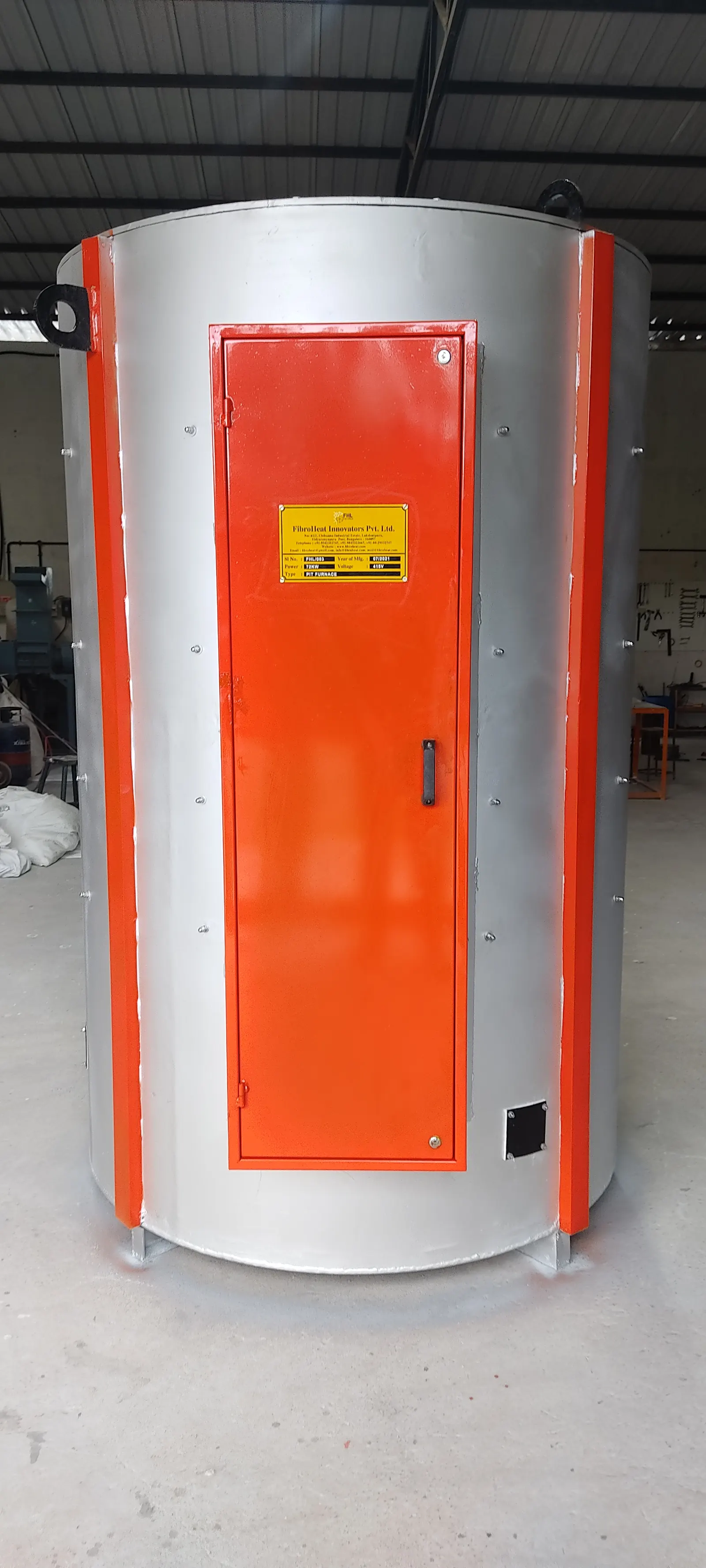
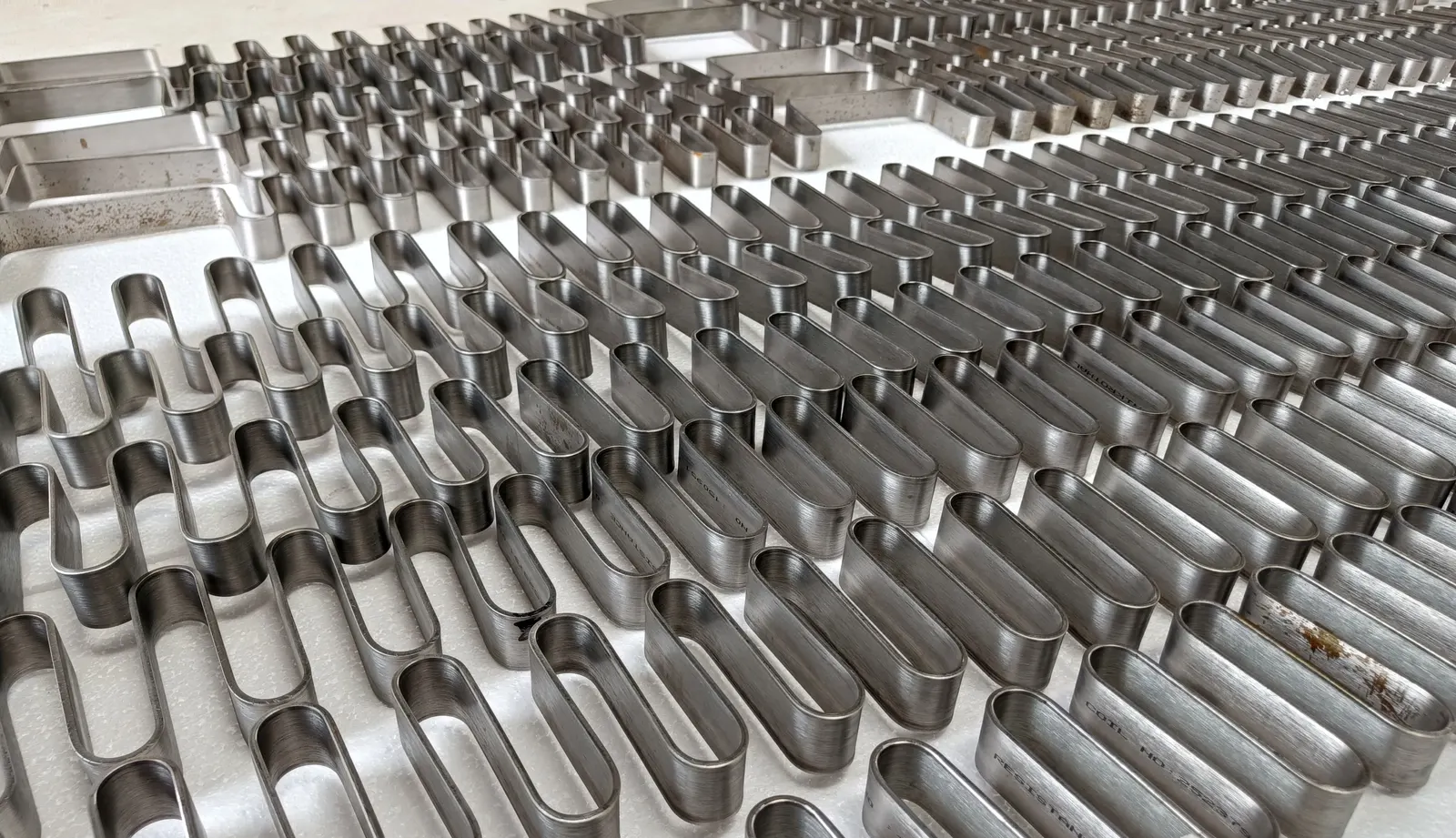
Choosing between Fe-Cr-Al and Ni-Cr heating elements is one of the most consequential decisions in electric furnace design. The alloy sets the maximum element temperature, the achievable surface loading, the expected element life, and ultimately the cost per operating hour. For duty between 1100°C and 1400°C the answer is usually Fe-Cr-Al, but Ni-Cr still wins in specific conditions, and getting this wrong in either direction is expensive — Ni-Cr that cannot take the temperature on one side, or Fe-Cr-Al mishandled into brittle failure during maintenance on the other. FeroHeat manufactures both families: Fe-Cr-Al Alloy 1 rated to 1400°C maximum element duty and Alloy 2 to 1420°C, alongside Ni-Cr 80 rated to 1100°C. All three are available as FHL® ROB (rod over bend) and SOB (strip over bend) heaters, FHL® spiral heaters, radiant and tubular heaters, and as FHL-MULTICORE® elements that put more power into a given space than a single-core construction. Elements are wound to order, so gauge, pitch, and cold-end design are matched to the furnace rather than taken from a catalogue page. This article compares the two alloy families on composition, resistivity, handling, and service life so you can specify with confidence. One word of framing before the numbers: every rating here is element temperature, not furnace chamber temperature, and the design margin between the two is where most element failures are born.
What is the difference between Fe-Cr-Al and Ni-Cr heating element alloys?
Fe-Cr-Al alloys — the Kanthal-type family — carry about 6% aluminum and 23% chromium with the balance iron. On first heat-up the aluminum migrates to the surface and forms a dense, adherent alumina skin that protects the wire from further oxidation and re-forms if lightly damaged in an oxidizing atmosphere. That skin is why Fe-Cr-Al survives to 1400–1420°C element temperature where Ni-Cr 80 tops out at 1100°C. Within the family, Alloy 2 carries marginally less iron than Alloy 1 and pushes the ceiling to 1420°C for the most demanding high-temperature duty. Ni-Cr 80, with 19–21% chromium and at least 77% nickel, forms a chromium-oxide skin instead: protective, but progressively less durable as temperature climbs. The alloy datasheets capture this difference directly — at 1200°C the FHL® Fe-Cr-Al alloys gain just 0.05 mg/cm²·h of oxidation scale against ≤ 0.25 for Ni-Cr 80. The practical consequence is that for furnaces operating at or above about 1100°C chamber temperature, Fe-Cr-Al is the default, and the familiar Kanthal vs Nichrome comparison almost always ends there. Both alloys perform best in clean oxidizing conditions; sulfur-bearing or carburizing atmospheres attack the protective skins and need careful review before either family is specified. The same skin chemistry makes pre-oxidation a deliberate step in good commissioning practice: elements are given a controlled first firing to build the protective layer before production service. A higher permissible element temperature also means a smaller, lighter element for a given furnace rating — the reason high-output furnaces above 1100°C are built almost exclusively on Fe-Cr-Al.
Fe-Cr-Al vs. Ni-Cr 80: how do the alloy datasheets compare?
FHL® Heating Alloys — Technical Data (Fe-Cr-Al vs. Ni-Cr 80)
| Property | Fe-Cr-Al Alloy 1 | Fe-Cr-Al Alloy 2 | Ni-Cr 80 |
|---|---|---|---|
| Max. element duty temperature (°C) | 1400 | 1420 | 1100 |
| Standard composition (%) | Al 6 · Cr 23 · Fe 71 | Al 6 · Cr 23 · Fe 70 | Cr 19–21 · Ni ≥ 77 · Fe < 1 |
| Electric resistivity (Ω·mm²/m) | 1.45 ± 5% | 1.45 ± 5% | 1.08 ± 5% |
| Thermal expansion factor | 15.1 × 10⁻⁶ | 14.8 × 10⁻⁶ | 17.6 × 10⁻⁶ |
| Oxidation increase at 1200°C (mg/cm²·h) | 0.05 | 0.05 | ≤ 0.25 |
| Tensile strength (MPa) | 650–900 | 650–900 | 700–900 |
| Specific gravity | 7.1 | 7.1 | 8.4 |
| Elongation (%) | 15–25 | 15–25 | ≥ 20 |
Three rows of that table do the real engineering work. Start with maximum duty temperature: a 1400–1420°C ceiling against 1100°C decides the alloy for most high-temperature furnaces before anything else is discussed. Next, resistivity. At 1.45 Ω·mm²/m against Ni-Cr's 1.08, an Fe-Cr-Al element needs roughly a third less conductor cross-section for the same resistance — or, read the other way around, it allows a thicker wire for the same power, and thicker wire means slower loss of cross-section to oxidation and longer element life. Fe-Cr-Al's lower specific gravity of 7.1 against 8.4 makes the finished element lighter still for the same rating. The parameter designers misapply most, though, is surface loading in W/cm²: run any alloy too hot per unit of surface and element life collapses regardless of its nominal temperature rating. Because Fe-Cr-Al tolerates higher element temperatures, it can be run at higher watt density in free-radiating duty, which shrinks the entire element package. FHL-MULTICORE® elements exploit this headroom — the multi-core construction consumes more power and reaches temperature faster in a given space than a single-core element, making it the compact route to higher furnace output. The resistance temperature coefficients stay small for all three alloys — 15–33 × 10⁻⁶ for Fe-Cr-Al and 58 × 10⁻⁶ for Ni-Cr 80 — so neither family surprises you with large resistance swings during heat-up, and the elongation and hardness rows preview the handling story covered below. And because FeroHeat builds both the elements and the ceramic support modules in the same factory, alloy, insulators, and module grade are engineered together as one system, with element-and-ceramic combinations rated for duty up to 2000°C.
When should you choose Ni-Cr 80 instead of Fe-Cr-Al?
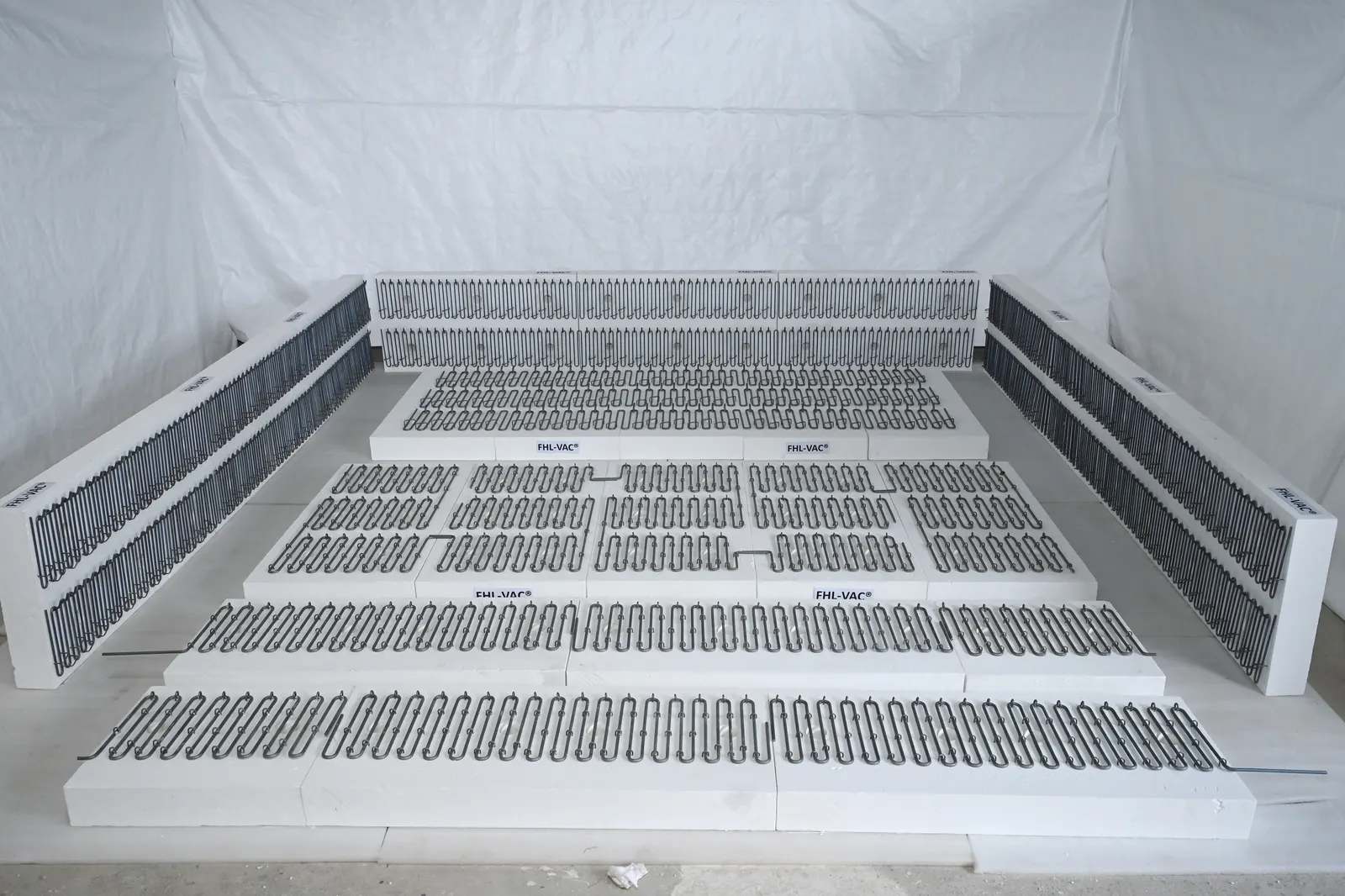
Fe-Cr-Al's weakness is mechanical, not thermal. After service at high temperature the grain structure coarsens and the wire turns brittle at room temperature: elements should not be bent, lifted, or disturbed cold, and the support design must carry the working length throughout the campaign. This is exactly where FHL-VAC® embedded flat insulation panels earn their keep — the element is factory-supported inside the ceramic module and shielded from accidental contact, so day-to-day handling risk largely disappears. Where elements must remain accessible, FHL-VAC® free-radiating panels suspend them on hooks embedded in the module surface for quick replacement without disturbing the lining. Ni-Cr 80 behaves oppositely in the workshop: it stays ductile after heating, tolerates vibration and thermal shock better, and is far easier to weld, straighten, and repair in the field. The high nickel content costs more per kilogram, but for the right duty that premium buys back maintenance time. In clean, steady, high-temperature service such as hardening, reheating, and sintering between 1100°C and 1400°C, Fe-Cr-Al remains the correct choice on both life and economics — Ni-Cr 80 wins where its ductility is the property being purchased. Watt density also interacts with mounting: an element seated in a carved module groove radiates less freely than one suspended in open space, so the same alloy accepts different loadings in FHL-VAC® embedded panels than on FHL-VAC® free-radiating hooks. For convection-assist and vacuum-furnace roles, FHL® radiant and tubular heaters use the same alloys in assembly form, sized to the chamber. Send chamber dimensions, target temperature, atmosphere, and duty cycle to info@feroheat.com or call +91 93413 52747, and our element team will design the winding, cold ends, and support spacing around the right alloy.
- Element temperatures staying below 1100°C with frequent cold handling of the furnace between campaigns.
- Vibrating or moving equipment, where Ni-Cr 80's retained ductility survives service that would crack embrittled Fe-Cr-Al wire.
- Contaminated atmospheres — sulfur-bearing or carburizing — that attack the protective alumina skin.
- Maintenance regimes that must re-form, straighten, or weld elements in the field rather than swap factory-built spares.
- Moderate-temperature convection-assist and oven duties where Ni-Cr 80's 1100°C ceiling is never approached.
- Cost-sensitive repairs on existing Ni-Cr installations, where switching alloy would mean redesigning supports, terminals, and transformer settings.
Key takeaways
- For element duty between 1100°C and 1420°C, Fe-Cr-Al is the default heating-element alloy; Ni-Cr 80 tops out at 1100°C maximum element temperature.
- Fe-Cr-Al survives extreme temperature because its aluminum content forms a dense, adherent alumina skin on first heat-up — oxidation gain at 1200°C is just 0.05 mg/cm²·h against ≤ 0.25 for Ni-Cr 80.
- At 1.45 Ω·mm²/m against 1.08 Ω·mm²/m for Ni-Cr 80, Fe-Cr-Al permits a thicker wire for the same resistance, and thicker wire means longer element life.
- Fe-Cr-Al turns brittle after high-temperature service, so elements must not be bent or disturbed cold; Ni-Cr 80 stays ductile and readily weldable.
- Always design to element temperature, not chamber temperature — the element surface can run 100–150°C hotter than the furnace depending on surface loading.
- FHL-MULTICORE® elements exploit Fe-Cr-Al's high-temperature headroom to deliver more power from a given space than a single-core element.
Frequently asked questions
Which is better for a 1300°C furnace, Fe-Cr-Al or Ni-Cr?
Fe-Cr-Al, without question. Ni-Cr 80 is limited to 1100°C maximum element temperature, and element surfaces typically run hotter than the chamber they heat. For a 1300°C furnace, FeroHeat specifies Fe-Cr-Al Alloy 1 (1400°C) or Alloy 2 (1420°C), wound as FHL® ROB, SOB, or spiral elements matched to the available space and rating.
Why does Fe-Cr-Al last longer than Ni-Cr at high temperature?
On first heat-up, Fe-Cr-Al forms a dense, adherent alumina skin that shields the wire from further oxidation — datasheet oxidation gain at 1200°C is 0.05 mg/cm²·h, versus ≤ 0.25 for Ni-Cr 80. Combined with a higher permissible element temperature and thicker wire for a given resistance, that skin gives Fe-Cr-Al its longer service life.
Can you weld or repair Fe-Cr-Al heating elements?
Not easily. After high-temperature service, Fe-Cr-Al grain coarsens and the wire turns brittle at room temperature, so field bending, straightening, and welding are difficult and breakage-prone. Ni-Cr 80 stays ductile and welds readily. FeroHeat's FHL-VAC® embedded panels sidestep the issue by factory-supporting the element inside the ceramic module.
What is FHL-MULTICORE®?
FHL-MULTICORE® is FeroHeat's multi-core element construction: several conductor cores in one assembly consume more power and reach temperature faster in a given space than a single-core element. It is available across the FHL® ROB and SOB ranges in Fe-Cr-Al alloys rated to 1400–1420°C, for high-output walls, roofs, and powerful furnace retrofits.
Is Fe-Cr-Al the same as Kanthal?
Kanthal is the best-known trade name for the Fe-Cr-Al alloy family — iron-chromium-aluminum resistance alloys with roughly 6% aluminum and 23% chromium. FeroHeat's FHL® Fe-Cr-Al Alloy 1 and Alloy 2 belong to this family, rated to 1400°C and 1420°C maximum element duty, and are wound to order as ROB, SOB, spiral, and FHL-MULTICORE® elements.
Written by the FeroHeat Engineering Team. Technically reviewed by Pranesh Kumar, Technical Director.