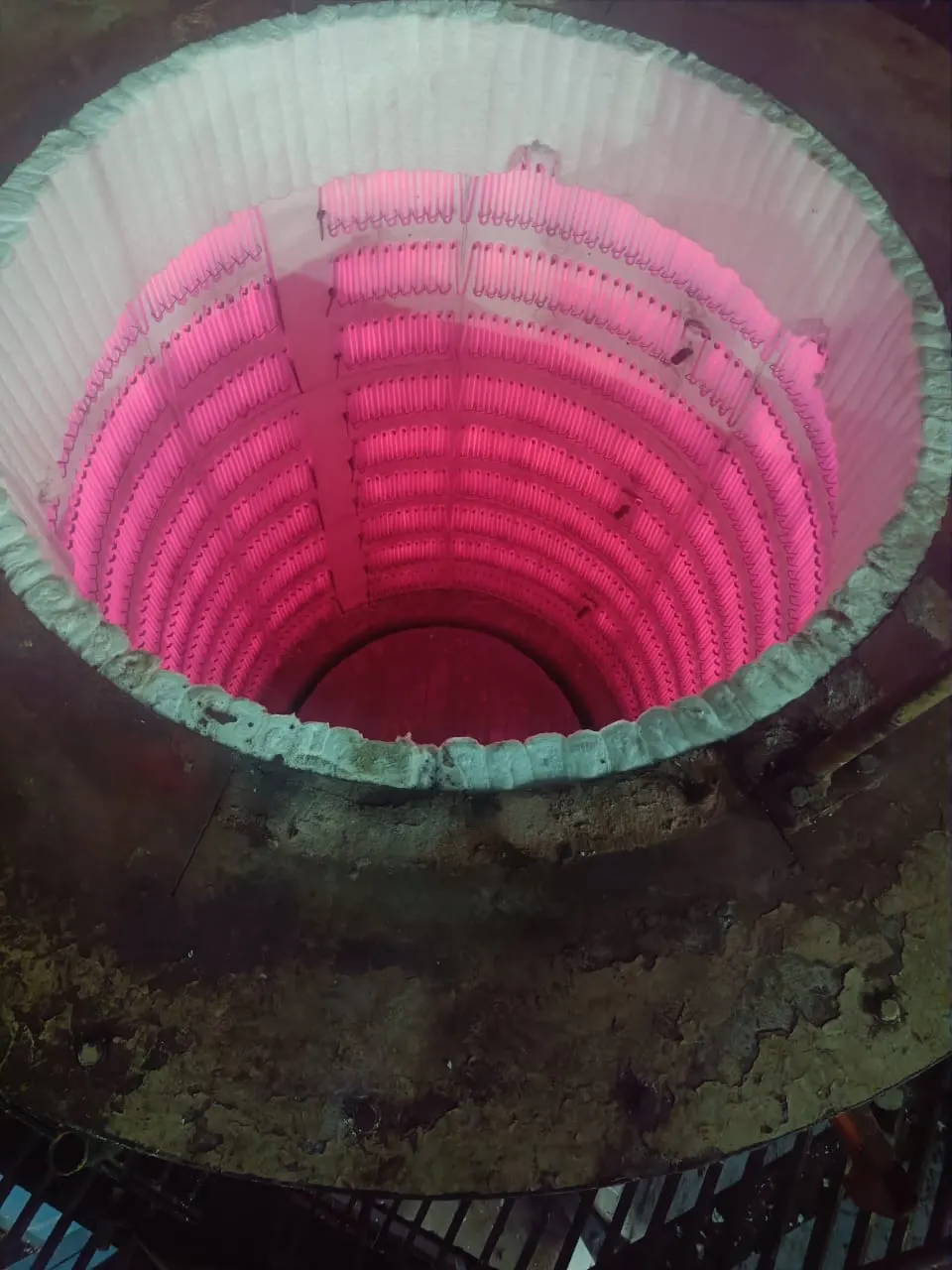
Furnace relining is usually triggered by visible lining failure: cracked brick, sagging blanket, hot spots on the shell. The real cost of a worn lining is invisible. It lands on the fuel or power bill every month, long before the lining collapses, because refractories degrade thermally well before they fail mechanically. Shrinkage opens joints, devitrified fiber loses resilience, and cracks and anchor points become new conduction paths through the wall. The furnace keeps running, and every cycle quietly wastes energy through losses the original design never had. A reline that simply restores the old specification locks those losses in for the whole of the next campaign. A retrofit to low-mass FHL-VAC® vacuum-formed modules does the opposite: it resets the furnace's energy baseline on the existing steel shell, usually without touching the burners, heating elements, or controls. The five mechanisms below are straightforward physics; what matters economically is that they act together, on every cycle, for the life of the lining. In our project experience, the furnaces that benefit most are often the ones still running productively on their original lining, because their owners have never seen what the same furnace costs to run with a tight, modern lining.
How much energy does furnace relining save?
The honest answer depends on cycle pattern, tariff, and furnace size, but the typical range for batch duty is well established. When a dense brick or castable lining is replaced by modules at 200–240 kg/m³, the heat stored in the lining falls roughly in proportion to mass — typically an 85–90% reduction per cycle — and heat-up to setpoint is typically 30–50% shorter. Add lower transmission loss through walls and roof, and plants normally measure energy-efficient fuel or power per charge on cyclic furnaces such as heat-treatment lines running normalizing, hardening, tempering, or annealing, where stored-heat loss dominates the bill. Continuous furnaces save less in percentage terms, mainly through reduced wall losses and faster recovery after stoppages, because storage is paid once per campaign rather than once per batch. Two cautions belong with every number here. First, these are planning figures: your furnace has its own cycle, atmosphere, and duty, so the figure that matters is the one you measure. Second, the measurement is easy — a shell-temperature survey and a fuel- or power-per-charge log taken before and after the reline give a defensible before-and-after comparison, which is exactly how FeroHeat's energy-audit service reports savings. Put in money terms: a midsize batch furnace spending typically a few lakh rupees a month on fuel or power can usually recover the reline cost in months to a couple of years, depending on cycles and tariff — which is why the audit quantifies savings before the scope is fixed.
Typical before-and-after on a batch heat-treatment furnace (~1000°C class) — illustrative figures
| Parameter | Legacy brick or castable (typical) | FHL-VAC® module lining | Why it changes the bill |
|---|---|---|---|
| Lining density | ~2,000–2,300 kg/m³ | 200–240 kg/m³ | Stored heat per cycle drops roughly with mass — about 90% less, typical |
| Thermal conductivity at 1000°C mean | ~1.0–1.5 W/mK (typical) | 0.24–0.28 W/mK (datasheet) | Less heat driven through walls and roof to the shell |
| Heat-up time to setpoint | Baseline | Typically 30–50% shorter | Far less lining mass to bring to temperature each cycle |
| Hot-face shrinkage | Joints open as brick shrinks and cracks | < 1% linear, 24 h at continuous working temperature | Joints stay closed; wall hot spots and radiant leaks disappear |
| Energy per charge | Baseline | Energy efficient vs baseline | Storage, transmission, and leak losses fall together |
How do low-mass ceramic fiber modules cut furnace energy consumption?
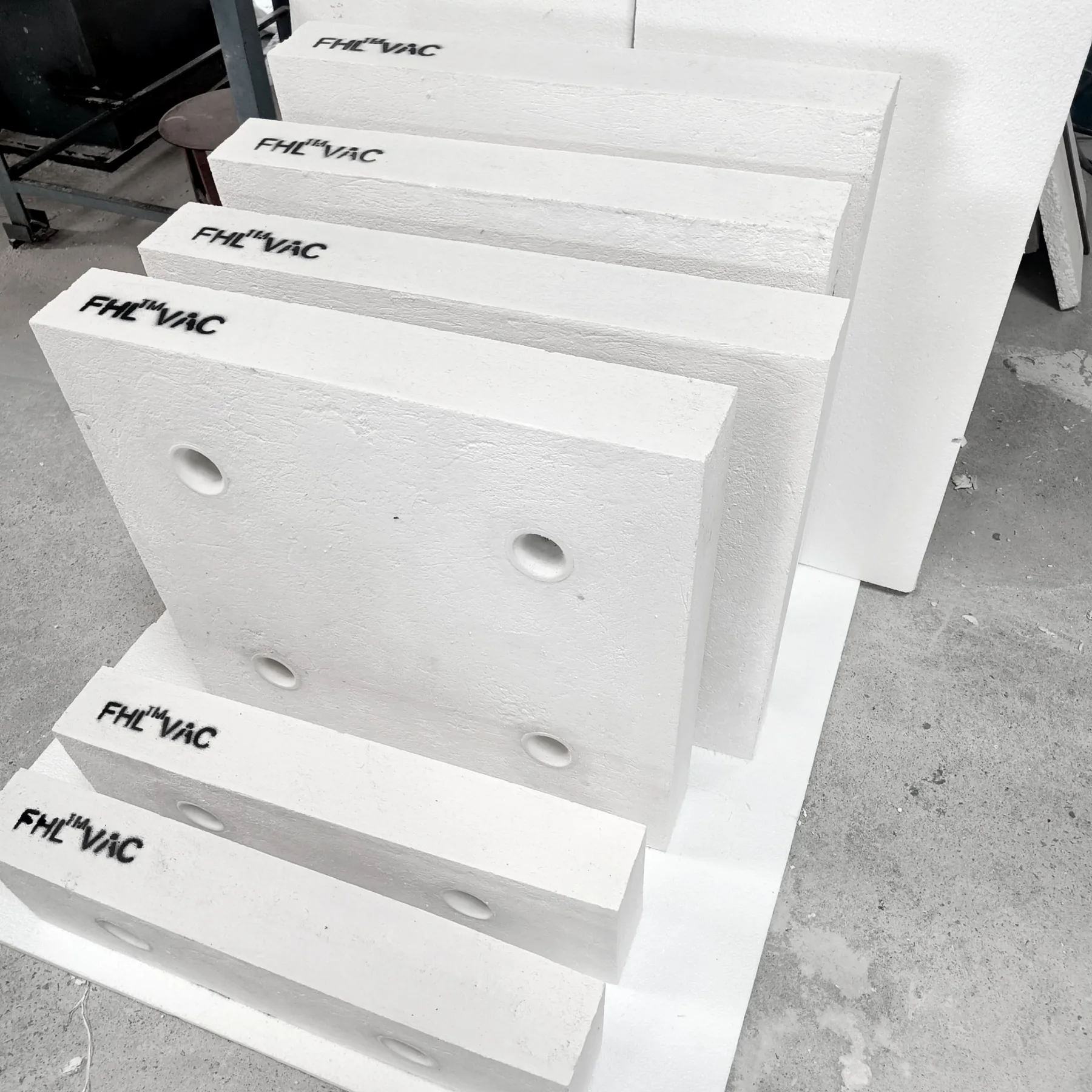
- Lower stored-heat loss. At 200–240 kg/m³, a module lining holds a fraction of the heat a dense refractory absorbs, so far less energy is dumped to the shop every time the furnace cools. In batch furnaces this storage term, not transmission, is usually the largest single loss.
- Faster heat-up. With less mass to bring to temperature, the furnace reaches setpoint sooner: shorter cycles, more throughput per shift, fixed overheads spread over more charges, and lower idling losses between batches.
- Lower transmission loss. A conductivity of 0.24–0.28 W/mK at 1000°C mean temperature keeps heat in the chamber, drops the shell temperature, and reduces the continuous loss through walls and roof for the whole campaign.
- Tighter joints, fewer leaks. Linear shrinkage below 1% (24 hours at the grade's continuous working temperature) keeps module joints closed for years, eliminating the radiant leaks and wall hot spots that age into every brick lining.
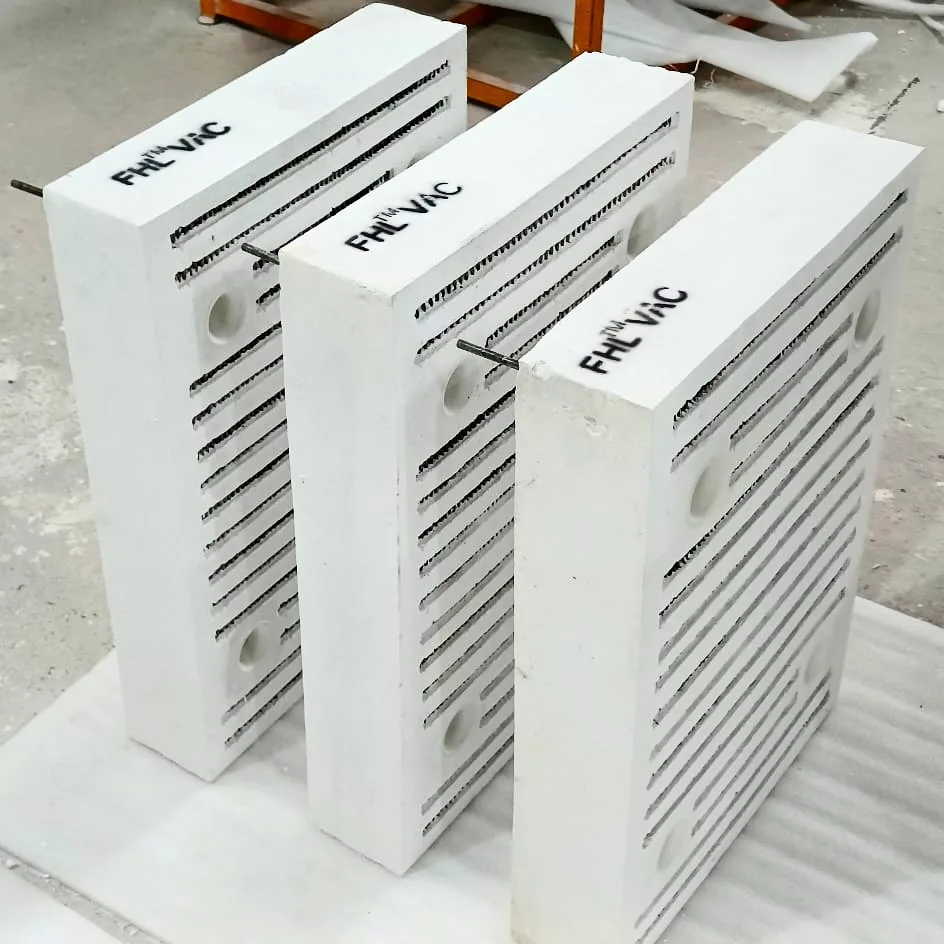
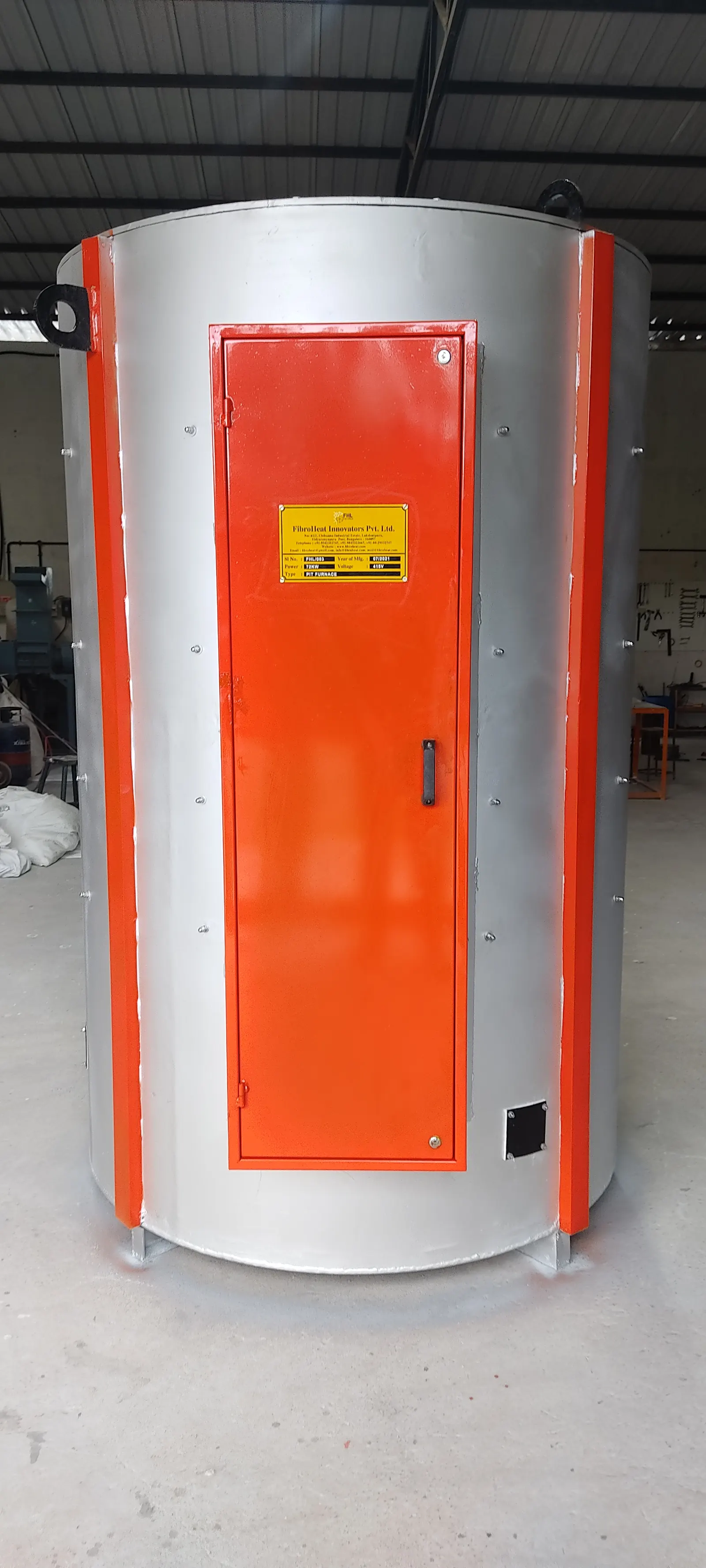
- Right-sized wall build-up. Panels up to 950 × 950 mm in 90, 100, and 125 mm thicknesses — plus matched cylindrical segments for pit and bell furnaces — let engineers match the insulation to actual duty, and a finishing coat of FHL® Emiglaze raises hot-face emissivity while sealing the fiber surface.
What does a furnace relining and retrofitting project involve?
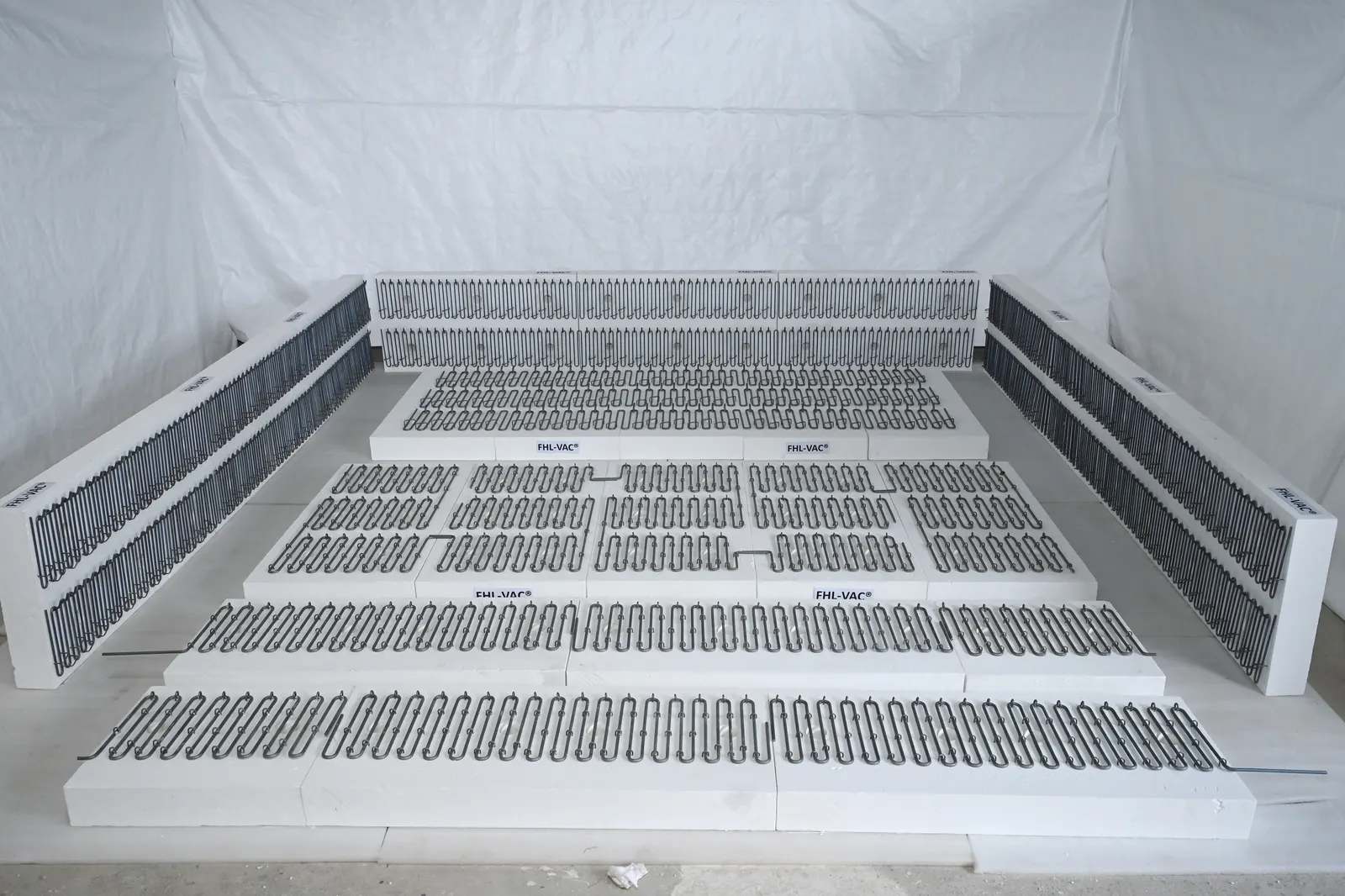
A FeroHeat project follows the sequence of our furnace relining and retrofitting services. It starts on site with an energy audit: shell-temperature mapping, fuel or power metering, and cycle analysis, so that wall losses, stored heat, openings, exhaust, and control behavior are quantified before money is spent, and every later claim has a baseline. Engineers then select the module grade for the duty — FHL-M 1150 for heat-treatment service, FHL-Z 1325 or FHL-HT 1550 for higher temperatures — and engineer the lining build-up, anchoring, compression, and element interfaces, with heating elements replaced or retained as the audit dictates. Site crews strip out the old lining, prepare surfaces, install modules with correct compression, apply the FHL® Emiglaze finishing coat, and support dry-out and recommissioning. Where uniformity across the load is critical, CFD heat-distribution simulation verifies the chamber before the first firing, and performance verification after startup closes the loop against the audit baseline. Because vacuum-formed modules need no extended cure schedule, downtime is measured in days rather than weeks, and the existing steelwork typically carries the far lighter lining without reinforcement. The audit report doubles as the business case, with savings and payback estimated measure by measure. Retrofitting keeps the existing shell and adds modern FHL® heating elements where the original heating system is tired, so lining and heating are upgraded in one outage window. Flat panels cover walls, roofs, and doors, while cylindrical segments reline pit and bell furnaces as matched rings, so geometry never forces an inferior material choice.
Which furnaces gain the most, and how fast is the payback?
The strongest candidates are batch furnaces cycling daily between ambient and working temperature — aluminium processing, automotive and aerospace heat treatment, foundry and forge reheating — because each cycle pays the storage penalty of a heavy lining again. Laboratory and small production furnaces benefit disproportionately: their linings are thin relative to chamber size, so stored-heat loss takes an even larger share of a small energy budget. Furnaces with damaged brickwork but sound steelwork are ideal: the shell stays while the lining, and the energy bill, change. Payback arrives through three channels at once: lower fuel or power per charge, higher throughput from shorter cycles and faster cool-down between batches, and lower maintenance cost, since crews can enter a low-mass furnace sooner after shutdown and local patching replaces full relines. Even furnaces with intact linings can justify retrofit on energy grounds alone when tariffs are high, and the FHL Modular Heating System — asbestos-free fiber — keeps installation crews within modern safety practice. Continuous furnaces benefit mainly through reduced transmission loss and faster recovery after stoppages. The one discipline that separates a defensible project from a hopeful one is measurement: a shell-temperature survey and a fuel- or power-per-charge log taken before the reline give you the baseline to prove savings to management and to justify the next retrofit. If a reline is due, start with an audit — send furnace drawings, cycle details, and fuel or power data to info@feroheat.com or call +91 93413 52747.
Key takeaways
- Relining a cyclic furnace with low-mass vacuum-formed ceramic fiber modules is energy efficient, with the exact figure proven by before-and-after fuel or power metering.
- Stored-heat loss dominates batch furnaces: at 200–240 kg/m³, an FHL-VAC® module lining holds roughly a tenth of the heat of a dense brick lining at a typical 2,000–2,300 kg/m³.
- FHL-VAC® thermal conductivity of 0.24–0.28 W/mK at 1000°C means several times less heat reaches the shell than through typical dense firebrick at roughly 1.0–1.5 W/mK.
- A reline that restores the old refractory specification locks the old losses in for the next campaign; only a retrofit to low-mass modules resets the furnace's energy baseline.
- Module relines install in days, need no extended dry-out, and the existing steel shell typically carries the far lighter lining without reinforcement.
- Every credible savings claim starts with an energy audit: shell-temperature mapping and a fuel- or power-per-charge log establish the baseline that proves payback.
Frequently asked questions
How much energy does furnace relining save?
In cyclic batch furnaces, replacing a dense brick or castable lining with low-mass ceramic fiber modules is energy efficient, with heat-up typically 30–50% faster. Continuous furnaces save mainly through lower wall losses. Verify with before-and-after metering rather than catalogue claims.
Is it worth retrofitting an old furnace instead of buying a new one?
Usually, yes. Retrofitting keeps the existing shell and replaces the lining and heating system with low-mass modules and modern elements at a fraction of new-furnace cost. You gain faster heat-up, better uniformity, and lower energy consumption, delivered in days of downtime rather than months of procurement and installation.
How long does a furnace reline take?
Module relines typically complete in days rather than weeks. Vacuum-formed panels and segments install quickly with straightforward anchoring and need no extended dry-out or cure schedule, so the furnace returns to temperature without the long ramp a castable demands. Faster cool-down also shortens the maintenance window before crews can enter.
Can you reline a furnace without replacing the steel shell?
Yes — that is exactly what relining and retrofitting mean. Worn brick or castable is stripped out and FHL-VAC® modules are anchored to the existing shell, which usually carries the far lighter lining without reinforcement. Burners, elements, and controls are retained or upgraded only where the audit justifies it.
What is included in a furnace energy audit before relining?
FeroHeat's audit covers on-site measurements and a thermal survey — shell-temperature mapping, fuel or power metering, and cycle analysis — followed by a loss breakdown across walls, stored heat, openings, exhaust, and control behavior. Findings become a ranked action plan with estimated savings and payback for each measure.
Written by the FeroHeat Engineering Team. Technically reviewed by Pranesh Kumar, Technical Director.